By Guest Writer: Kat O’Sullivan
Most musical writers begin in the same place: a feeling, a story that won’t leave you alone, a character you can’t stop hearing. Or a wound, a question, a joy that keeps asking to be turned into something. That’s often the right place to begin. It’s the thing that gets you to the piano, the notebook, the voice memo, or the blank page in the first place.
But at some point in the development process, another question becomes just as important: Who is this musical for?
That question can make writers uneasy. It can sound like strategy arriving too early, or worse, like an invitation to trade instinct for marketability. I get it, because I’ve felt that hesitation myself.
Still, if you feel called to create something, there is also a responsibility that comes with that call. If your musical carries a message you think could move, challenge, comfort, or change people, why wouldn’t you want as many people as possible to hear it? Understanding who those people might be isn’t a betrayal of the art, it’s part of the work.
Authenticity and strategy are often treated like enemies, but in practice, they can sit in the same room. Learning to talk about your work clearly can help it reach the people you dream will find it. As artists, we have the freedom to dream; in strategy, we must be able to defend those dreams.
Audience awareness is a compass that keeps your development and marketing pointed in the right direction.
Audience Is More Than Ticket Buyers
Your audience is a number of butts in seats, yes. But it is also the humans who feel the impact you intend to make with your art. The ones who feel seen, the ones who hear something in the score or recognize something in the story and carry it with them after the curtain falls.
A target market can tell you who might buy a ticket, but I’m talking about something more distinct to the soul: the person you imagine coming up to you after a performance and saying, “Thank you, I needed that.”
Audience awareness doesn’t need to be the foundation of your art. But I do think it should be a pillar, something you can return to when you hit a creative block, something you can defend in a pitch room, and someone you can picture when the curtain falls.
Knowing Your Audience Clarifies Your Message
One of the most useful things about identifying your audience is that it forces you to get clearer on what you’re actually trying to say.
As writers, most of us have opinions about everything. We care about a dozen contradictions at once. It can be tempting to let one musical try to hold all of them.
But a musical can say something meaningful without trying to hold every idea at once. Knowing your audience allows you to hone in on your message; you don’t have to comment on everything going on in the world that you have opinions on. You can directly and intentionally say everything you want to about the thing you’ve promised people they are going to see.
That doesn’t mean a show can only be about one thing. Next to Normal, for example, speaks powerfully to the experience of mental illness and the experience of loving someone through it. It also explores grief, drug use, family dynamics, marriage, and the aftermath of loss. But the show knows its center.
Audience awareness is what helps you find yours, and distinguish between what belongs at the heart of the piece and the details that surround it.
The First Audience Is Probably You
Sometimes, when you first ask who your musical is for, the answer is simply: “well, me.”
That’s a meaningful place to start. But even then, go deeper. What part of you is the show speaking to?
Maybe it’s the kid who loved reading sci-fi after curfew. Maybe it’s the grown you, still looking for proof that love is real. Or maybe it’s the unhealed version of you that you wish knew what you know now.
The things that call us to create are often clues to who our audience might be. If your show came from a specific pain, there are probably other people carrying something similar. If it came from joy or curiosity, there may be people who need access to that feeling too.
The personal origin of a musical doesn’t make its audience smaller. Specificity is often exactly what allows other people to find themselves inside the work.
You may be the first audience, but there are other seats in the theatre for a reason.
Get Practical Without Getting Cynical
In business, defining your target market looks like age, income, location etc… These categories can feel cold when applied to your art, but they’re not irrelevant to the life of a musical.
Age may affect how your audience discovers new work. Are they on Facebook? TikTok? Are they seeing flyers for your local theater at the grocery store, or sharing clips with friends on their phones? Are they the kind of person who finds a show through a cast album in the car and feels like it was written for them?
Income and access matter too. Can your audience afford Broadway? Would you be doing them a disservice if the only version of the show they could ever encounter was financially out of reach? If so, do you really need to write in that rotating stage that would never fit into a regional theater budget? Maybe the first life of the piece is a concert. Maybe it’s a college production or a community partnership. Seen this way, a concert version, college production, or community partnership can become a real and necessary path for the show.
Scale is part of this too. A large, technically complex production may be exactly what your show needs. But if the audience you most want to reach is likely to encounter the piece in schools or smaller spaces, it’s worth asking whether the physical demands of the show support or limit its future life.
When Your Audience Already Exists
Sometimes your musical is connected to a world, a story, a figure, or a fandom that already has an audience. That can be a gift, but it can also come with expectations.
If your show is based on a book, myth, film, or existing cultural world, many people arrive with a relationship to the material before they ever hear the first note. They may have favorite characters they see clearly, moments they hope play out how they imagine, rules they believe the world should follow.
You don’t have to follow every expectation, but in order to intentionally break the rules you need to understand what they are.

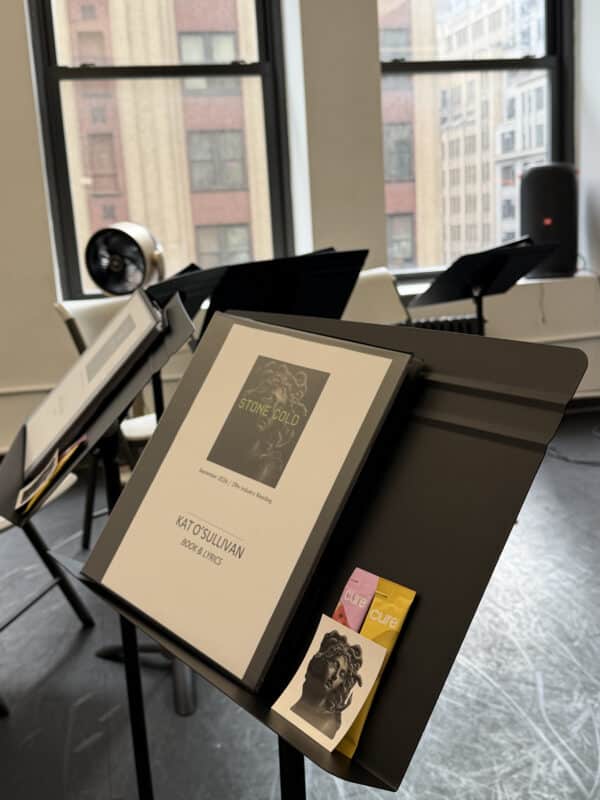
Stone Cold, which I’m developing with my co-writers Delaney Guyer and Kenny Youch, reclaims the myth of Medusa as a story about an assault survivor. Choosing a famous myth as the conduit for that story comes with a clear and wonderful fandom, Greek mythology lovers who are devoted, deeply knowledgeable, and hold these stories close to their hearts.
In the writing room, knowledge of our audience has shaped every conversation about deviation. When we choose to depart from what mythology fans might expect, in character, we can’t do it casually. We have to be able to defend it. We have to know why our version of Medusa’s story is better served by that choice, and be willing to make that argument to each other before we ever make it to an audience.
But it works in the other direction too. Because we know this audience comes in hungry for certain things—transformation, fate, gods, monsters, magic—we’ve given ourselves permission to go all in on delivering them. If I’m inviting an audience into ancient Greece with the hint that there’s magic… I better give you some mega magic.
For us, audience awareness helps clarify when we’re moving away from expectation and when we’re leaning fully into it. Every choice becomes cleaner because you know which side of that line you’re standing on.
Working With Expectation
When a musical has a built-in audience, one of the most useful questions you can ask yourself is: what does this audience expect, and what am I actually willing to do with those expectations?
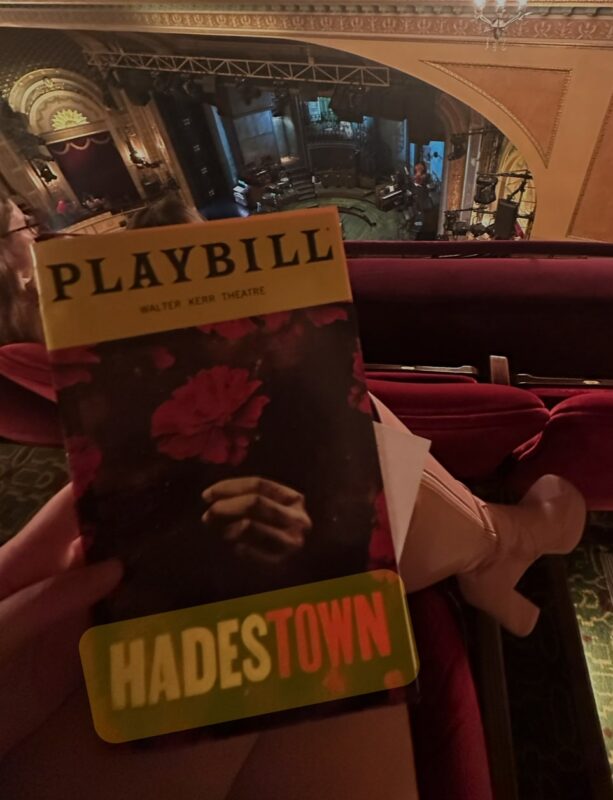
Hadestown is a useful example here. The loose retelling of the Orpheus and Eurydice myth makes radical structural and tonal choices, transplanting the story into a Depression-era industrial underworld. None of that is faithful to the source, and yet the show honors the emotional truth of the myth so completely that audiences who love the original feel it.
Instead of focusing on what people already expect, look at the source material and decide what the story needs you to keep, reshape, or let go of.
Breaking expectations can be exciting; the key is knowing when you’re doing it and why.
Throwing the Expected Audience Out the Window (And Why That’s Also Valid)
Of course, not everyone starts with an inherited audience, and some of the most exciting work comes from writers who throw the rulebook out entirely.
Cole Escola’s Oh, Mary! is a wonderful example of a writer doing whatever they want. Cole has admitted in interviews, hilariously, that they never looked deeply into the story of Mary Todd Lincoln before writing a groundbreaking play about her life. And here’s the thing: Cole absolutely could have. There is a devoted audience of Civil War historians, Lincoln scholars, and serious biography readers who might have shown up for a faithful, well-researched portrait of Mrs. Mary Todd.
But Cole didn’t write for them. Cole wrote a fever dream, a comedy, queer joy, a piece of delightful chaos that had almost nothing to do with historical accuracy and everything to do with what Cole wanted to make. And an entirely different audience found it, and they’re currently buying tickets to the Stalter Administration.
When the Audience Doesn’t Fully Exist Yet
Sometimes you’re writing toward an audience that’s still taking shape.
Upon first discovery, one may think Lin wrote Hamilton for history buffs. He remained true to that audience, but he also defined one that had yet to be shaped: musical theatre rap lovers. Twenty years ago, this cross-section would’ve been hard to imagine, yet today, more shows lean into speed and flow in their lyricism.
That intersection feels easier to imagine now, because Hamilton helped make it visible. Lin reached beyond existing audiences to create a new one, and now we can hear his influence everywhere from new musicals hitting the market to niche TikTok trends.
Audience awareness can also mean recognizing an underserved intersection and writing so specifically into it that the audience begins to form around the work.
A Note From the Middle of the Work
I’m currently developing a musical about Franz Kafka, and I find myself in exactly the position this article is describing.
Who is a Kafka musical for? Literature lovers? People drawn to existential dread and dark comedy? Theater audiences hungry for something cerebral and strange? All of the above? Some intersection I haven’t named yet?
If nothing comes to you right away, you can’t force it. Ask the question, then let the answer come into focus over time.
I share this not to provide an example, but to say: if you’re sitting with this question right now and don’t have an answer yet, that’s okay, you’re still in the right place.
Why This Matters in the Pitch Room
It’s no secret that producers are drawn to projects with clear market potential, but that doesn’t mean your art has to pander. Often, it simply means a producer can imagine who will be sitting in the seats on opening night, why they came, and why they’ll tell someone else to come.
If you can articulate who your show is for, you make it easier for others to advocate for it too. It helps a theater picture the show inside its season. It helps collaborators understand the promise of the piece.
Most importantly: knowing your audience can help you protect the work. When someone suggests a change, you can ask, does this serve the audience we’re trying to reach? Does it deepen the promise of the show? Does it sharpen the impact, or dilute it?
Exercises for Finding Your Audience
If your project, like my Kafka musical, has an audience that is still TBD (to be defined), you can ask yourself these questions:
Question 1: What problem does the show address?
This doesn’t have to mean a literal problem… It may be an emotional wound, a spiritual question, a cultural contradiction, a personal longing, or something your show keeps circling without being able to name.
Ask yourself:
- What is the central wound, question, joy, or desire in my show?
- Who has lived close to that?
- Who might feel seen by the way this story handles it?
- What do I want the audience to understand, feel, or carry with them by the end?
Example: Next to Normal addresses the struggle of mental illness, but also the experience of loving someone with mental illness. Around that specific center, it weaves in grief, medication, family dynamics, and loss. Many themes, but the show holds a clear emotional center.
Question 2: Who do you see waiting at the stage door?
Close your eyes. Imagine the show has just ended, a line of people is waiting to speak to you, someone approaches, hugs you, and thanks you for the work.
What do they look like? How old are they? What moment in the show reached them? What lyric, scene, or image made them feel understood? What specifically touches you about their words?
That imagined person may tell you more about your audience than any demographic category ever could.
Question 3: What does the existing audience expect?
If your show is based on source material, a myth, a historical figure, or a fandom, make a list of what that audience may expect.
- What characters or moments might they consider essential?
- What tone do they associate with this world?
- What would disappoint them?
- What would excite them?
Example: When watching Hadestown, audiences familiar with the myth of Orpheus and Eurydice may expect the love story, the journey to the underworld, and the tragic ending. What they likely don’t expect is a Depression-era labor allegory, a Hades who runs a factory, or a Hermes who narrates with world-weary irony. Holding and knowing those expectations is what makes the deviations land as intentional rather than careless.
Question 4: What are you willing to honor, and what are you willing to leave behind?
Once you understand the expectations an audience may hold about your show, decide what you’re doing with them.
- Which expectations am I fulfilling?
- Which am I reinventing?
- Which am I intentionally rejecting?
- Can I defend those choices?
- Do they serve the version of the story I’m trying to tell?
Example: In Hamilton, the creative team made choices to cast diversely and intentionally, to use no guns on stage, and to feature verbose language delivered with modernity. Every deviation from expectation was a conscious decision in service of the show’s argument.
Keep Returning to the Audience
All this to say, I believe in making art that speaks to the soul. Don’t swap the truth of why you’re creating something for the exchange of projected ticket sales. Art that caters is often art that leaves us feeling hollow.
Thinking about audience can be a way of listening more closely to the work, the world around it, and the people it may one day reach. It’s what allows you to walk into a pitch room with confidence, to make intentional choices instead of accidental ones, and to imagine, on opening night, the person who comes up to you afterward and says exactly what you hoped they would.
So start with the story you need to tell, then keep asking who you hope will listen.
Author Bio

Kat O’Sullivan is an award-winning musical theatre writer and theatre-maker whose work explores womanhood, power, and self-reinvention through contemporary retellings of myth and history. A graduate of the University of Colorado Boulder’s business program, she co-writes the Medusa-inspired musical Stone Cold with Delaney Guyer and Kenny Youch, currently in development as a full-length stage musical. An eight-track concept album for Stone Cold: The Medusa Musical is set to be released on October 16, 2026.
For more information:
Listen to “Office with a View” from Stone Cold: The Medusa Musical.
Follow Stone Cold on Instagram.
Follow Kat on Instagram.