If you’ve ever submitted a script or score for a festival, reading, or development opportunity, you know the stakes: first impressions matter. Formatting mistakes, missing cues, or unclear descriptions can distract from your story and ultimately cost you precious rehearsal time.
The eight “Submission Rules” spelled out in this article come straight from one of the regular MusicalWriters.com masterclasses I lead for our members, as well as my 20+ years of working with musical theatre scripts and scores. As a director, producer, and frequent reader of new scripts, I’ve seen just about every mistake writers make — and developed these simple rules to help you make your script professional, readable, and production-ready.
While these issues are often encountered during submissions, their true purpose is much broader: they are core principles of script and score formatting that help you put your best foot forward anytime someone else touches your work — whether that’s a reader, director, or actor.
Submission Formatting Rule #1: Page Numbers
The first rule of submission formatting is all about clarity and time.
If I can’t say, ‘Let’s go from page 23,’ and everyone finds it instantly, we’re losing rehearsal minutes.
Every page of your script — from the title page forward — should be numbered. This includes dialogue pages, song pages, and any transitions. Use consistent formatting (top right corner or centered at the bottom of the page is typical).
Missing numbers, duplicate numbers, or lyric pages without numbers all cause confusion when people are flipping back and forth during rehearsals.
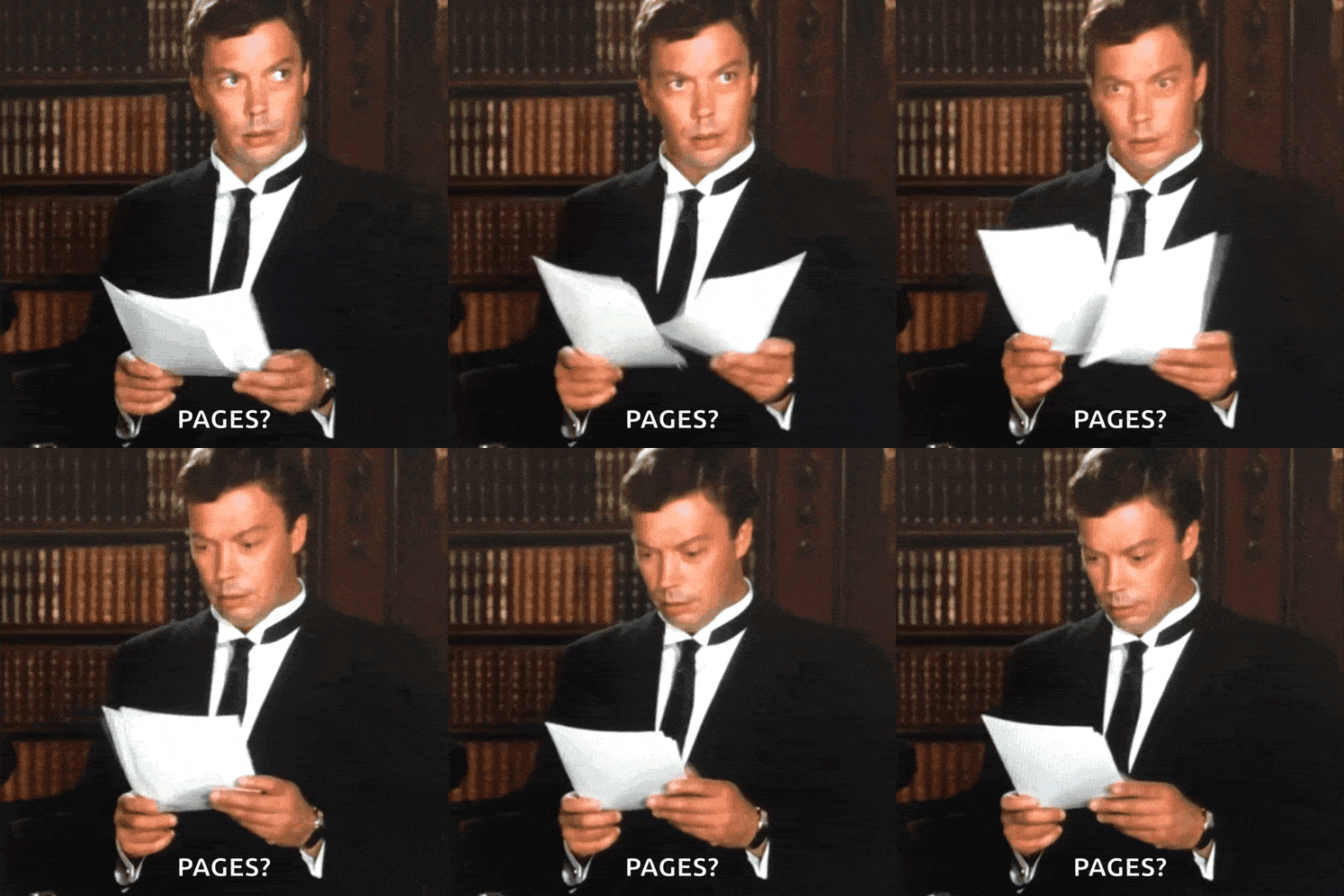
This issue comes up most often when scripts and scores are being integrated, revised, or combined late in the process. Page numbers are frequently the first thing to get shuffled or duplicated when changes are made — which is exactly why maintaining consistent numbering from the very beginning of the show through the final page is critical.
Submission Formatting Rule #2: Italics for Stage Directions. Always.
Stage directions are not dialogue. They shouldn’t compete with the words your actors say.
Italics immediately distinguish action from dialogue and make the script easier to scan. Whether your script is in Word, Google Docs, or Final Draft, italicize all stage directions, and place them in parentheses or indented lines.
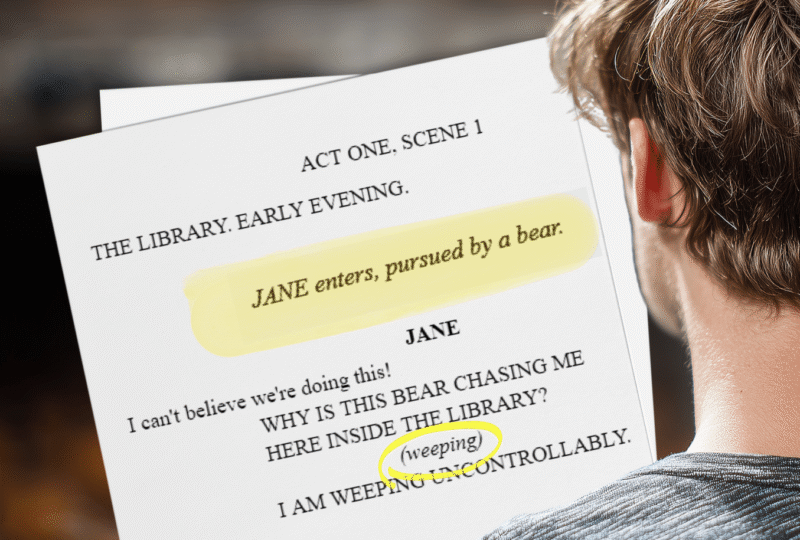
This is a personal preference — and one I feel strongly about — even though there are well-respected formatting templates that do not use italics at all. The real rule here isn’t italics specifically; it’s consistency.
Whatever system you choose, commit to it fully and use it the same way throughout the entire script.
Keeping directions consistent helps directors and actors read quickly without misreading a cue as a spoken line.
Submission Formatting Rule #3: Character Name Consistency
Pick a spelling, pick a format, and stick with it.
If it’s “Ms. Johnson” on page two, don’t let it become “Mrs. Johnson” or “Teacher” on page ten. And don’t switch from all caps to title case halfway through.

Similarly, use the same spelling, capitalization, and formatting every time a character appears. Consistency helps everyone follow along, especially when your show is being read by people unfamiliar with it.
Make sure this consistency also matches the character breakdown at the front of your script. Any discrepancy between the breakdown and the dialogue pages creates unnecessary confusion and can lead to casting or doubling errors later.
It also prevents accidental duplicate entries when the script is imported into digital rehearsal tools.
Submission Formatting Rule #4: Song Numbering & MUSIC GO
Songs should never sneak up on your reader. Or your rehearsal pianist.
When a song begins, everyone needs to know exactly where the music starts. No guessing.
Use numbered song titles (for example: “Song 3: The Hero’s Lament”) and indicate clearly where each song begins. Place [MUSIC GO] or a similar cue in bold or caps at the moment the accompaniment enters.
Consistency is key here (noticing a theme yet?) — not just for your actors and designers reading the script, but for your music director and rehearsal pianist who are tracking dialogue, underscoring, and entrances in real time. Clear cues eliminate guesswork and keep the room moving.
It’s also helpful to include short parenthetical cues like (Music continues under dialogue) or (Song reprise begins) when relevant.
Submission Formatting Rule #5: Lyric Punctuation
Your lyrics are dialogue set to music — they need punctuation to communicate meaning and pacing. Use commas, periods, and question marks in both your script and vocal score.
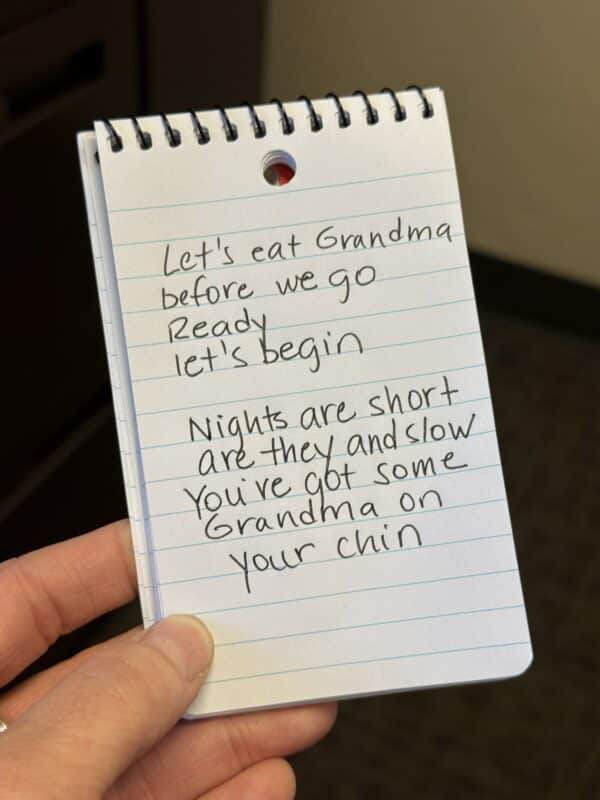
Lyrics without punctuation are a nightmare. Singers can’t tell if they’re asking a question or ending a sentence, or doing something else entirely.
Matching punctuation between the script and the score adds clarity, reinforces intention, and ensures performers and musicians interpret phrasing the same way.
Submission Formatting Rule #6: Integrated Script & Score
(Yes, this is the longest section — clearly I feel strongly about it. We even have a whole article on how to do it.)
We see enormous benefits to an integrated script-and-score format for development readings, workshops, and even full productions. One combined PDF — flowing in order — keeps everyone literally on the same page.
Some established formatting guidelines still ask writers to include full lyrics in the script in addition to the piano/vocal score. If it were up to me, you’d skip that step entirely. An integrated format ensures that every line of dialogue, lyric, and stage direction lives inside the music — which is where most actors go first when learning a show.
If the lyrics are in the music, that’s where they live. Duplicating them just means someone’s flipping pages for no reason.
You will still likely need a “script-only” version for tech teams, board operators, and designers who don’t read music — and that’s completely normal and appropriate.
It’s also worth noting that many “JR.” productions are already licensed and distributed in this integrated format. The image below shows a sample of one of these pages, from the MTI Jr. website.

Is this required? Not yet — and probably not for a while. Most submissions still expect scripts and scores separately, and we’re used to reading them that way. But if you’ve already integrated your materials, let folks know. It might just make it easier for someone to say yes to your project.
Submission Formatting Rule #7: All Lines & Action Inside the Songs
If you don’t provide a fully integrated script and score, we still need everything that happens in a song — lines, action, and interruptions — inside the sheet music pages.
Don’t make me flip back and forth between the dialogue and the music.
If a character speaks mid-song or performs an action, include that text directly in the score, ideally between musical staves. This keeps rehearsal flow intact and prevents missed cues when music and dialogue overlap.
Pro Tip: Don’t want to tackle formatting yourself? MusicalWriters.com offers script formatting services and we can match you with experts who can help you create your own integrated script / score.
Submission Formatting Rule #8: Cue Lines
Even if the transition to a song feels obvious, cue it clearly in the script and score. The audience might not know a song is coming, but your accompanist and cast need to.
Clear cue lines support both traditional and integrated formats. A brief setup line provides emotional logic, musical clarity, and rehearsal efficiency — especially when underscoring or tempo shifts are involved.
The cue line becomes the emotional bridge between spoken and sung storytelling.
Wrapping Up
These 8 rules of musical script and score formatting may seem small, but together they create a clear, professional, and rehearsal-ready submission. Following them shows respect for your collaborators — and for your own work.
As I said during the masterclass: “We can forgive a clunky lyric. We can’t forgive a script that’s impossible to follow.”
Want more hands-on feedback like this? Join MusicalWriters.com for masterclasses, workshops, and personalized feedback sessions designed to help you take your show from mess to yes.