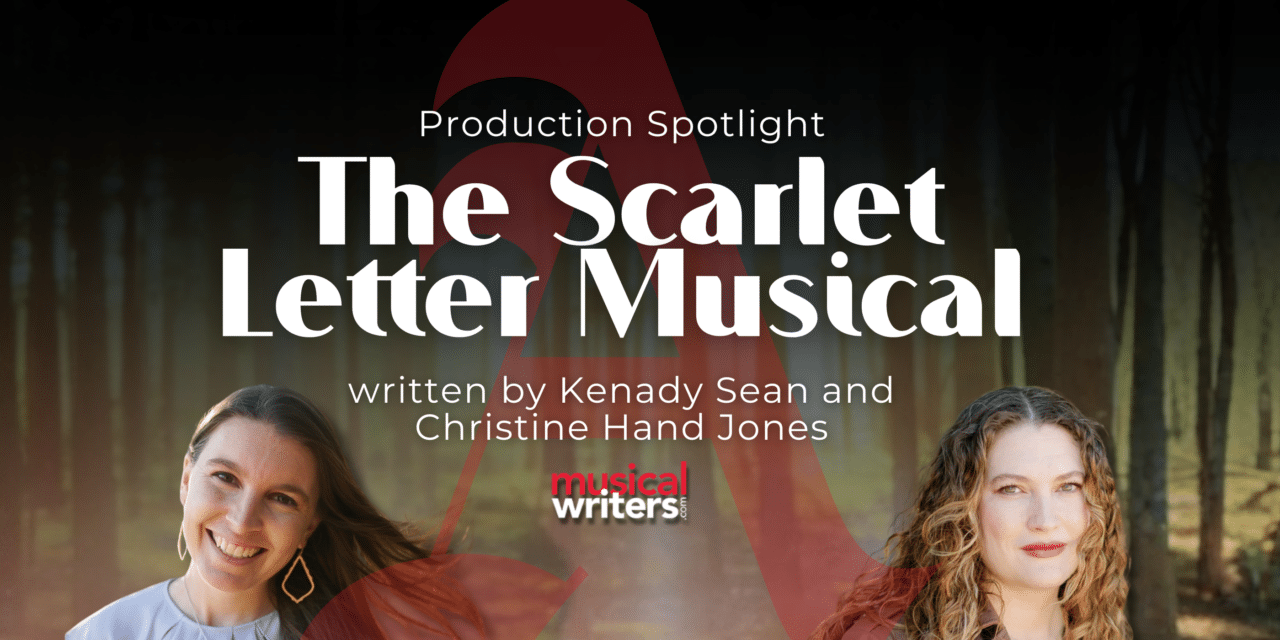
Building a Bridge from Dallas to New York with The Scarlet Letter Musical
⭐“NYC, just got here this morning. Three bucks. Two bags. One me.” – Star-to-be, Annie. ⭐
For generations of musical theatre creatives, showing up in New York City with nothing but ambition in your suitcase is a rite of passage. But what if you could arrive with a suitcase full of something even better – a musical that’s already proven itself in front of a paying audience?
That’s exactly what the writers and MusicalWriters.com production team behind The Scarlet Letter Musical did this spring, developing and producing the show in Dallas first, and then toting the entire cast, crew, and production to New York City for a festival performance.
The result? A successful test case for a regional-first development model.
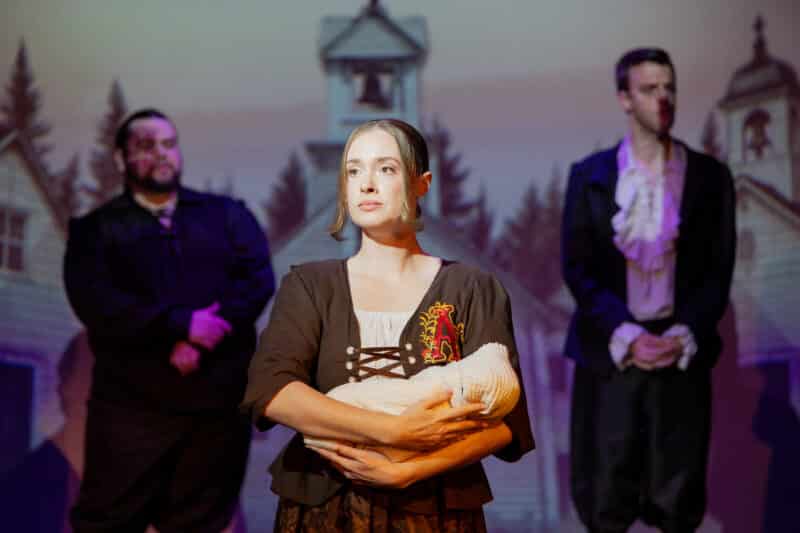
📸: Delaney Rain Photography
“For years, we’ve been told that meaningful musical theatre development only happens in New York City,” said MusicalWriters CEO and Scarlet Letter director Rebecca Lowrey. “What this process proved is that you can do incredibly valuable artistic work regionally, build a team that believes in the piece, and then bring a much stronger version of the show into New York when the time is right. That’s a model I hope more writers will consider.”
A Classic Story, A Contemporary Folk Sound
The Scarlet Letter Musical began in 2018, when Kenady Sean approached Christine Hand Jones with the idea of adapting Hawthorne’s novel for the stage.
Sean, a Texas-based musical theatre writer, producer, and founder of the Broadway Bridge Project, had studied with Jones, a literature professor and singer-songwriter with PhD in literary studies from UT Dallas, and twenty-plus years in the Dallas-Fort Worth live music scene.
At first, Jones was not convinced. “I was skeptical about a musical based on The Scarlet Letter, but I decided to give it a try, and soon, I was hooked,” she said. “There’s a lot more to this story than what most people remember from high school, and I loved helping to bring it to life.”
The two writers began by reading the novel together, discussing themes and songspotting. They divided songwriting assignments, each penning roughly one song per month before coming back together to edit the material, write the book, and record demos for the show’s first reading.
“We’ve split all the work 50/50, with each of us contributing to book, lyrics, and music,” Jones said.
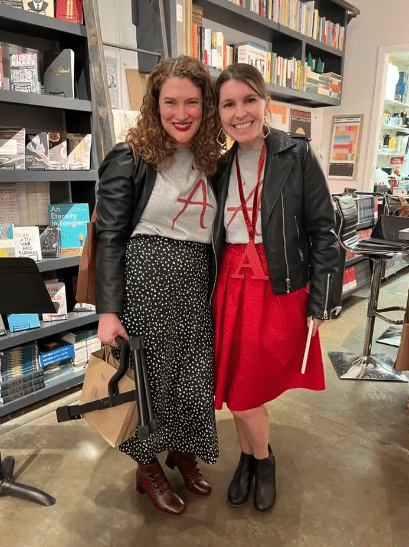
The writers of The Scarlet Letter Musical, Christine Hand Jones and Kenady Sean. 📷: @the_scarlet_letter_musical (Instagram)
Sean described the development path in three broad phases: finishing and fine-tuning the first draft, moving into readings and dramaturgical reviews, then finding opportunities to get the show on its feet. Milestones included a first virtual table reading with Theatre Three in 2020, a reading at Deep Vellum Books in Dallas in 2023, a workshop with The Table Co/Lab in Grapevine, Texas, in July 2023, and a concert presentation at Green Room 42 in New York City in September 2024 in partnership with BroadwayDNA and MusicalWriters.com.
“All these steps, plus dramaturgical feedback and rewrites, prepared us for the Dallas/NYC production,” Sean said.
💡Interested in producing a concert presentation of your musical in NYC? Check out this MusicalWriters article.
Edits and Development
By the time The Scarlet Letter Musical reached this production, the “bones” of the show were solid. But the Dallas rehearsal process gave the writers something previous development steps could not: real actors, working in real time in a concrete space.
“At some point in any show’s development process, it becomes less effective to rewrite on your own, and you need to see it on its feet,” Sean said. “The ability to be in the room and at rehearsals helped us see areas that we needed to tweak and made the show so much stronger.”
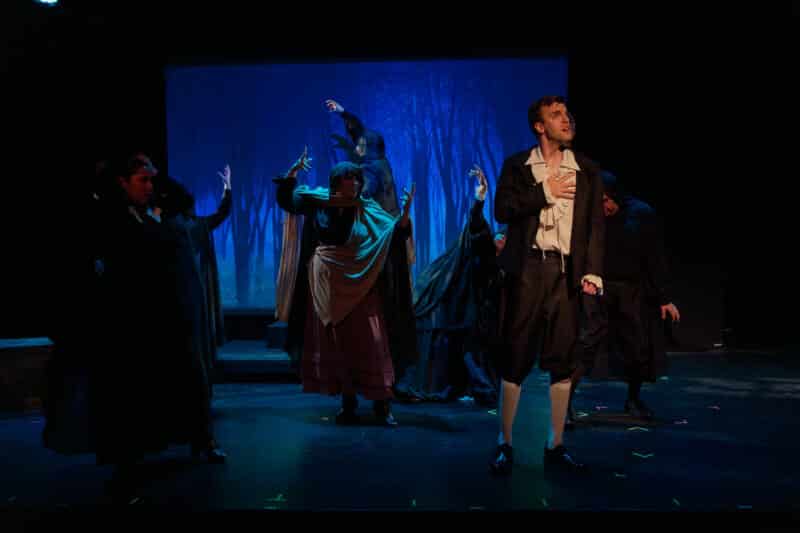
📸: Delaney Rain Photography
Jones credited director Rebecca Lowrey with helping solve musical and theatrical problems that only became clear once the show entered rehearsal. “Rebecca’s insights as a director pushed us to make some musical changes that are some of my favorites in the show – and they wouldn’t have happened without the practical problems that arise when trying to work with real humans in real space, and without Rebecca’s frank assessment of the show’s needs.”
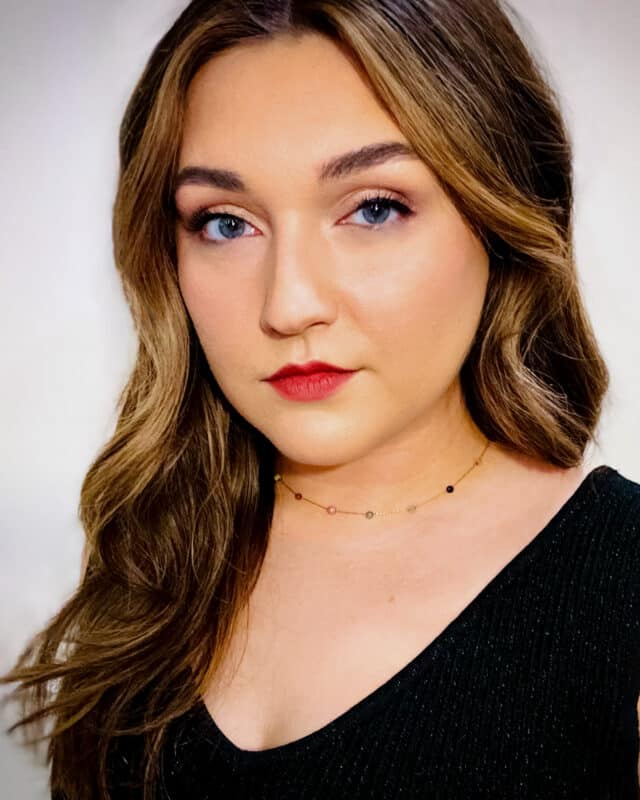
Assistant director and cast member Aly Badalamenti
Assistant director and cast member Aly Badalamenti described what those discoveries look like in practice: “Is the intention behind a line of dialogue clear? Are we revealing a plot point too early? Does this scene change need music behind it? Does this actor have enough time to make a quick costume change? These are the kinds of questions that only became apparent while fully mounting the show.”
Sean named some specific examples: “We had never seen what it would look like when Chillingworth opens Dimmesdale’s shirt to reveal a letter A. We knew we wanted Grown Pearl more involved, but seeing her onstage in most every scene will inform future drafts. We had plenty of stage directions about how weak and sickly Dimmesdale is, but seeing it will inform how I write his character in the future. We weren’t sure of the role of dance/movement storytelling in this particular piece, but seeing movement added helped clarify its role in future drafts and iterations.”
Talent and Support
The Dallas Scarlet Letter production gave the team a chance to showcase the DFW theatre community. “We knew that the talent pool in DFW is strong; we wanted to show New York what Dallas could do!” Jones said.
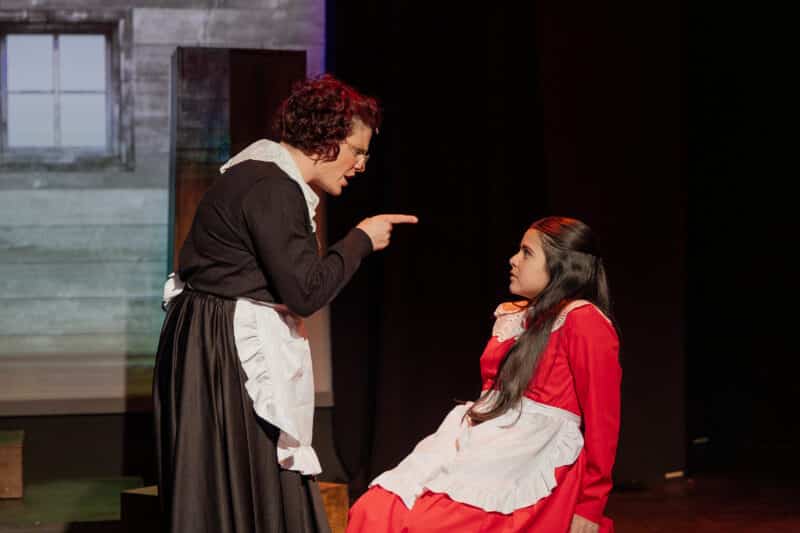
Cast members Sarah Powell and Victoria Gomez. 📷: Delaney Rain Photography
“Too often, local talent is viewed as a stepping stone,” director Lowrey said. “This cast demonstrated that exceptional work can happen anywhere, and that these artists are more than capable of carrying a show onto a New York stage.”
“I was also surprised by Christina Kudlicki’s incredible choreography that brought the story to life so beautifully,” Jones added. “The first time I saw the full choreo for ‘The Baby Cries,’ along with Lexi’s amazing singing and acting as Hester Prynne, I was in tears.”
For Badalamenti, the most memorable part of the process was watching the writers experience the show fully staged for the first time. “There was a special energy in the room as everything came together in front of an audience. You could see the pride and emotion on their faces. Creating new work requires an incredible amount of vulnerability and bravery. They put something deeply personal out into the world without knowing exactly how it would be received, and all of this risk paid off.”
Marketing Windfalls
“We knew that taking our show to a New York festival would be expensive no matter what, so we wanted to get as much value out of the experience as possible,” Jones said. “For us, that meant being able to sell tickets locally using a full band for the Dallas production.”
“The added bonus was that since the Dallas production was in our hometown, I truly think it created buzz and momentum around our friends and family that will help move and push our show forward,” Sean said.
Jones added that the Dallas production also generated something every developing musical needs: “quality video and pictures that we can use to market and share the show in the future.”
Click on any image below to view in full screen. Click “back” to return to the article.
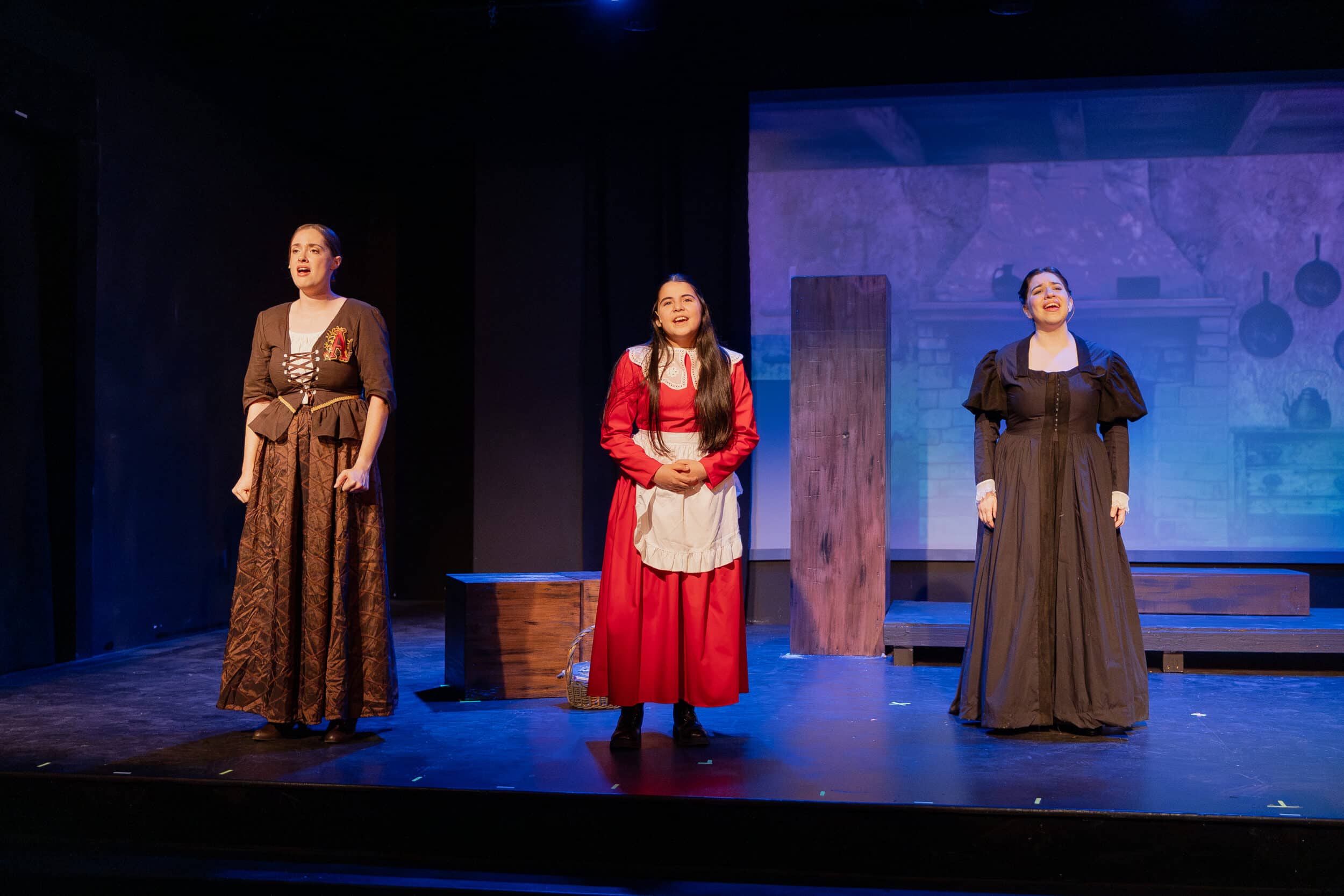
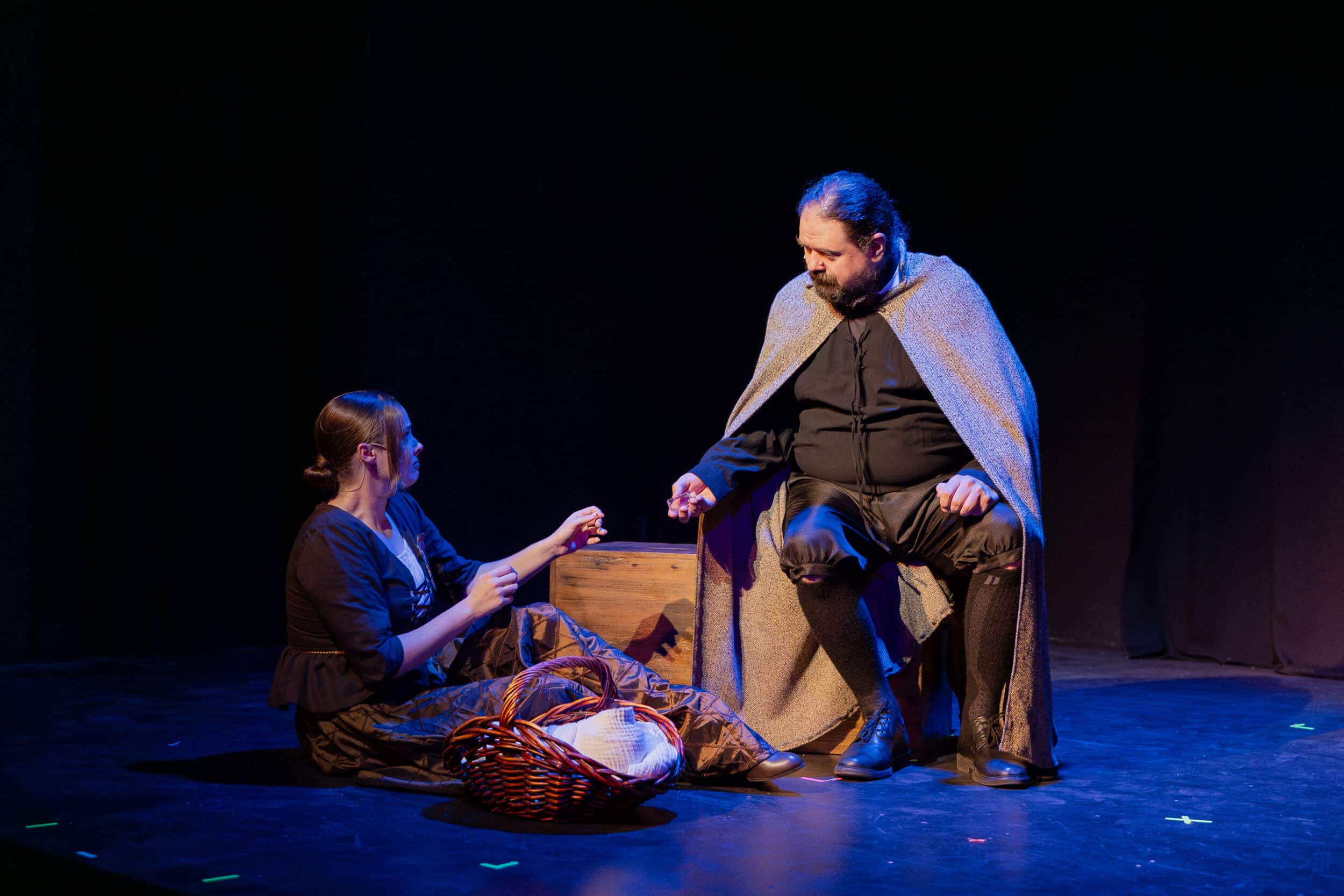
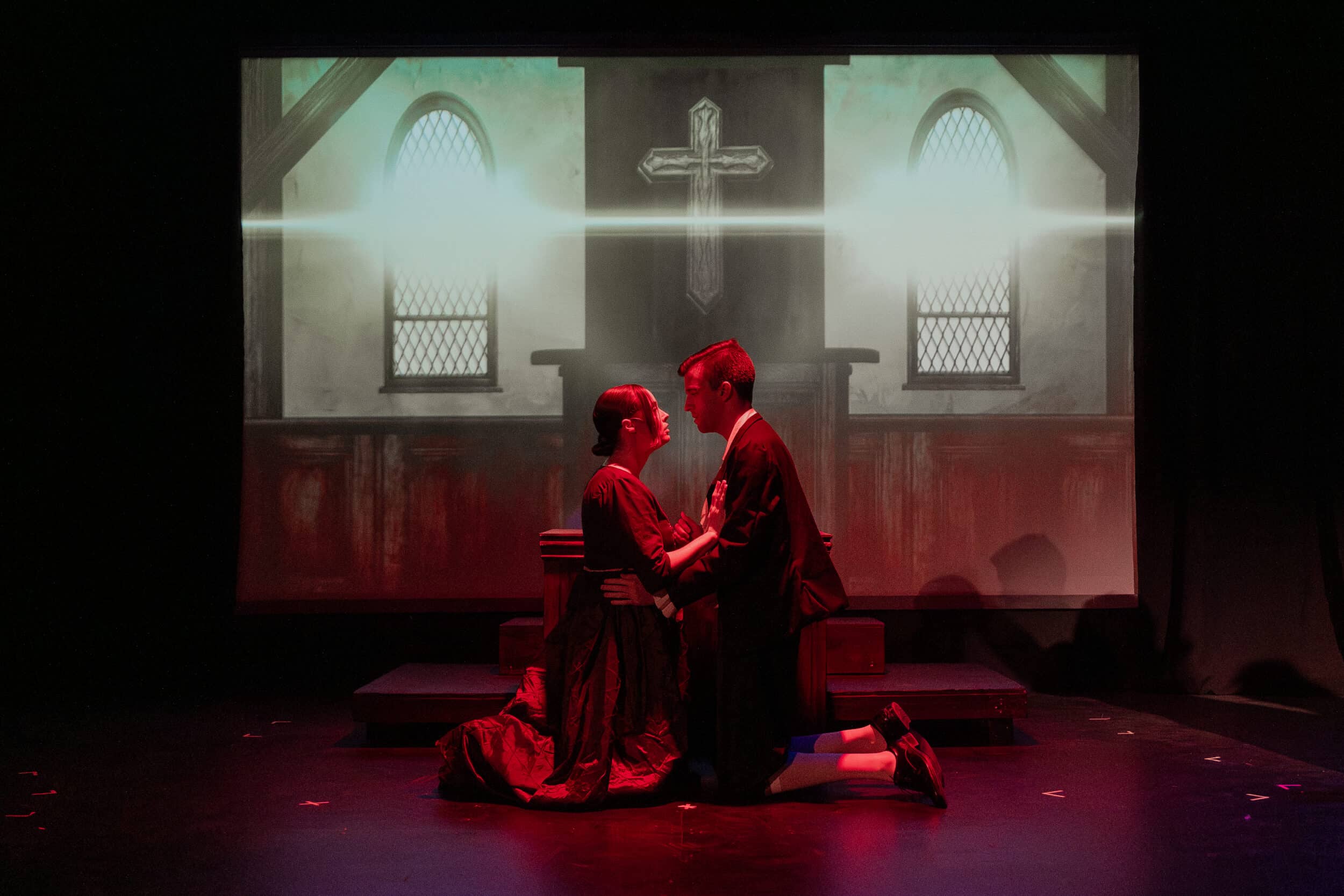
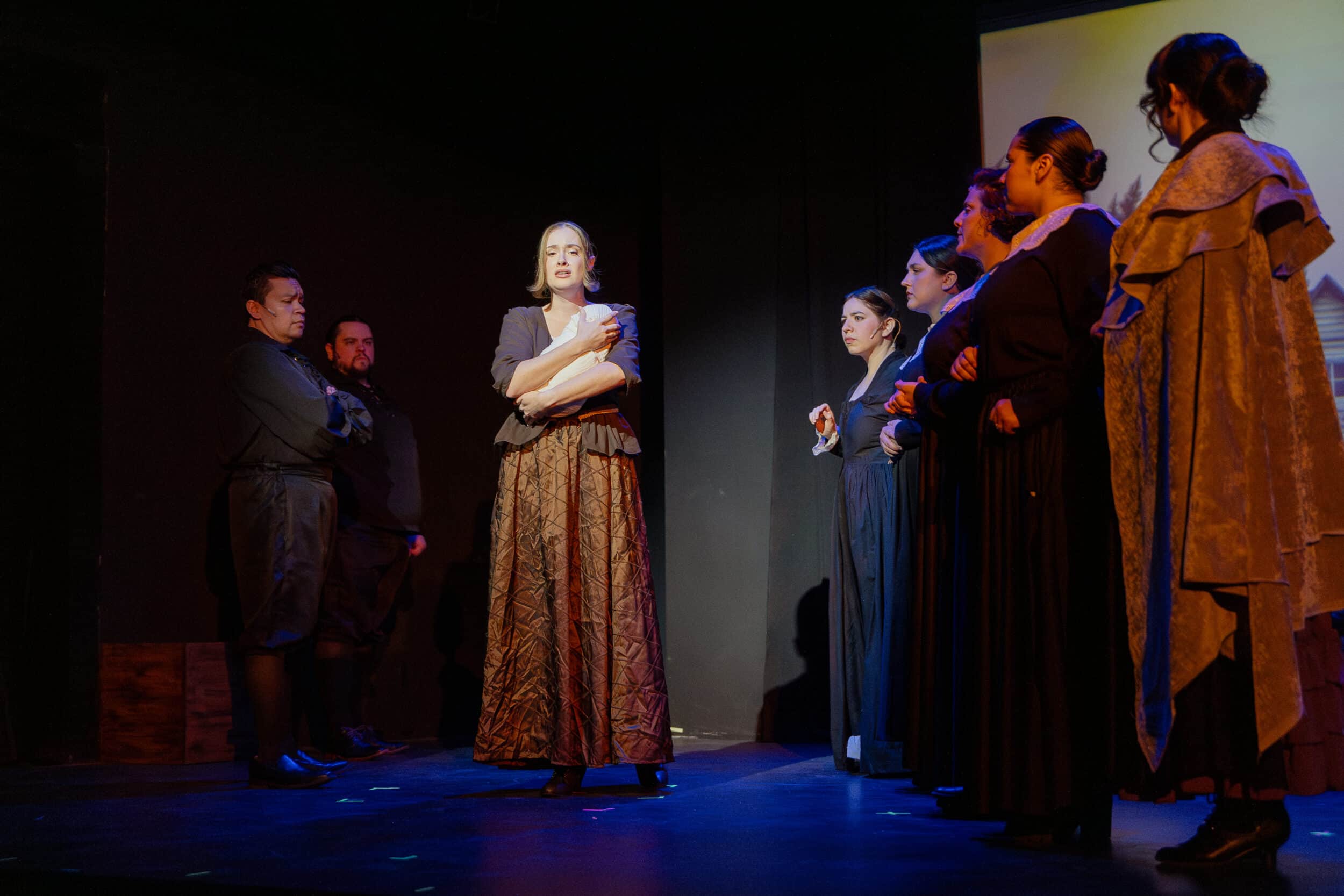
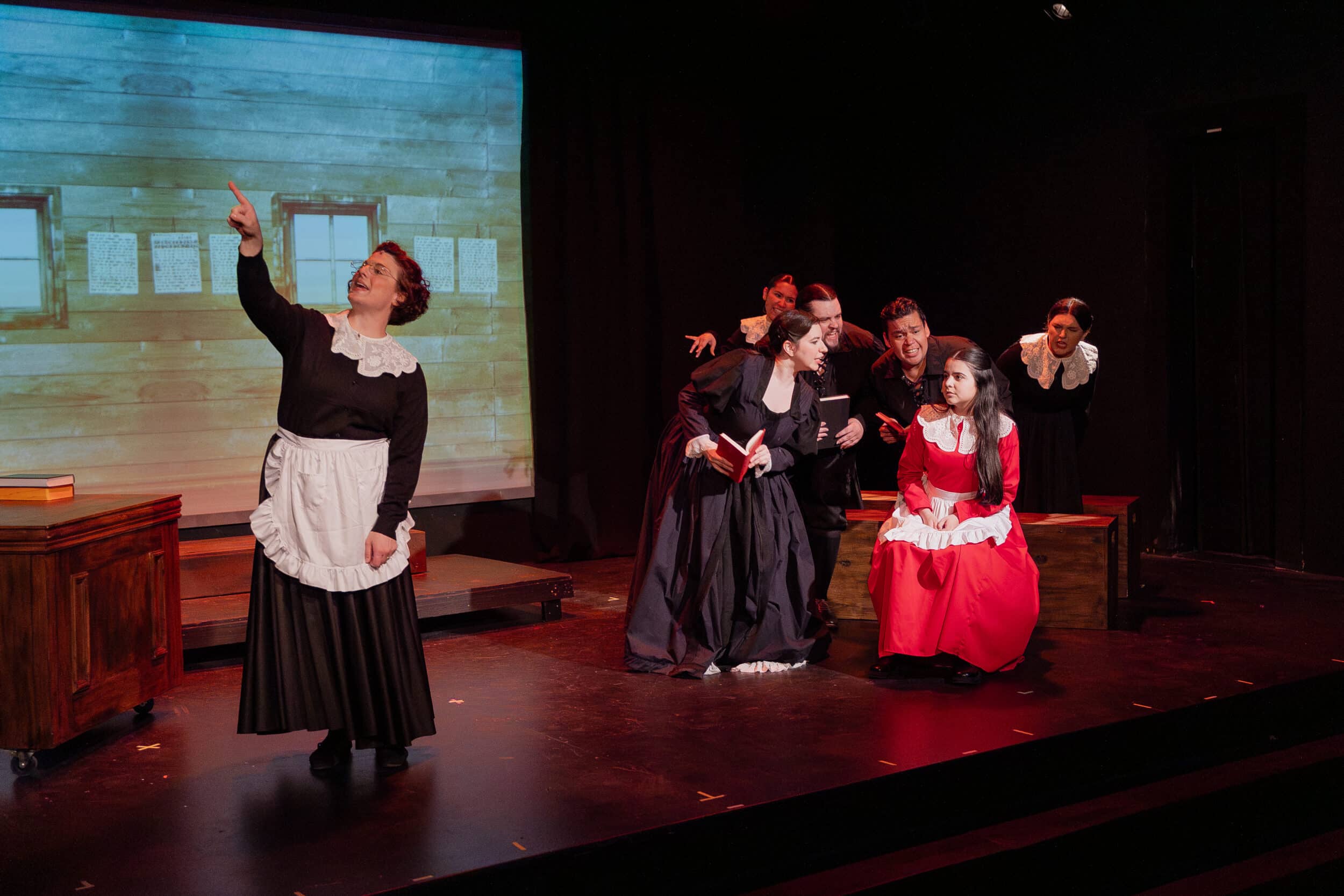
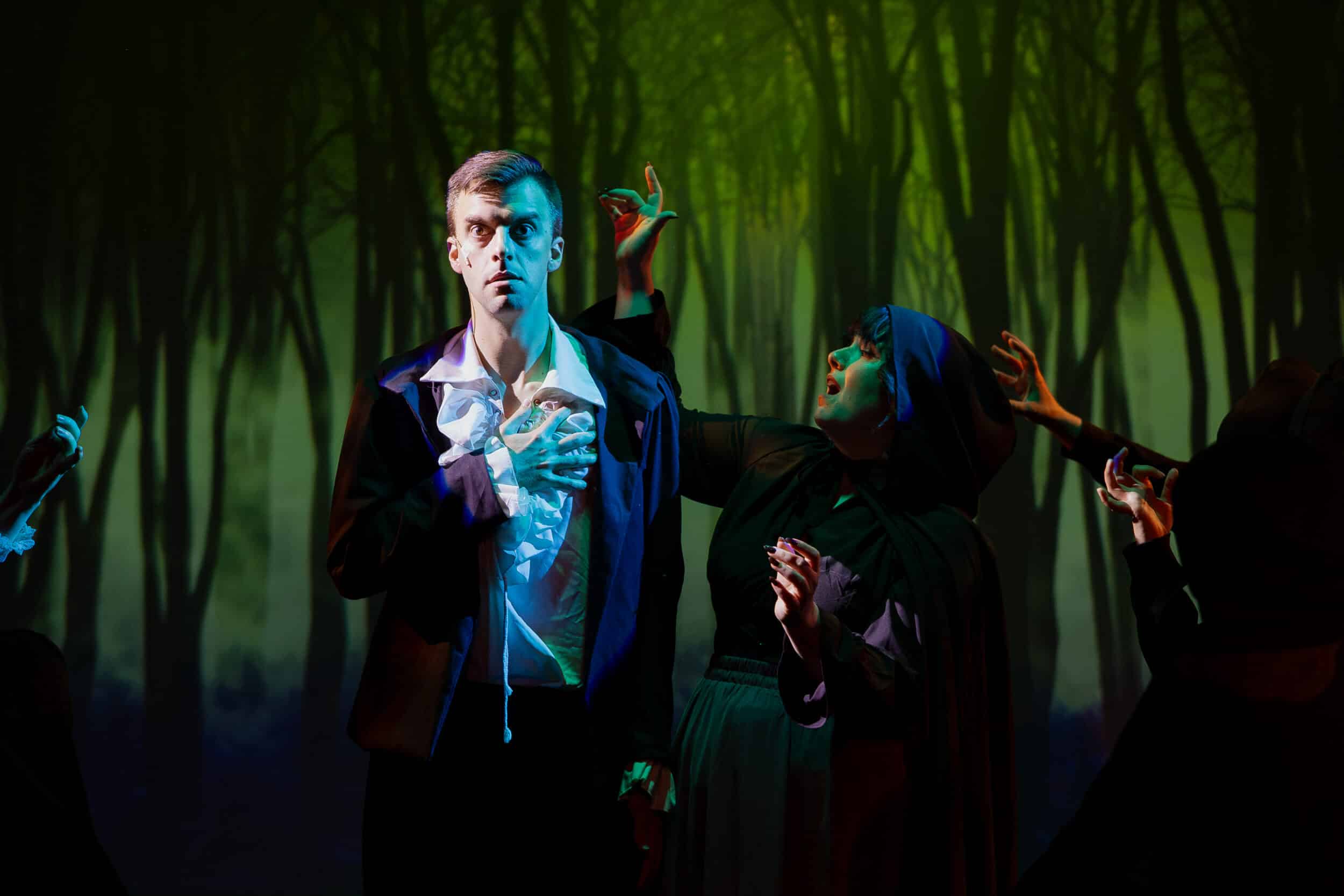
A Musical in a Suitcase
After the Dallas production, The Scarlet Letter Musical traveled to New York City as part of Emerging Artists Theatre’s Spark Theatre Festival. But taking a musical from one city to another is rarely as simple as booking flights and showing up.
“Taking the show across the country from Dallas to NYC meant we essentially packed the entire show into a handful of suitcases and hoped for the best,” Badalamenti said. “We arrived at the theatre in NYC with little time to adjust, having never physically been in the space before. This required an incredible amount of planning and anticipatory problem-solving to take place before we even got there.”
Thanks to the Dallas run, actors already knew the material, major staging challenges were already solved, and everyone was on the same literal and metaphorical page. Still, some problems could only be solved in the NYC rehearsal room.
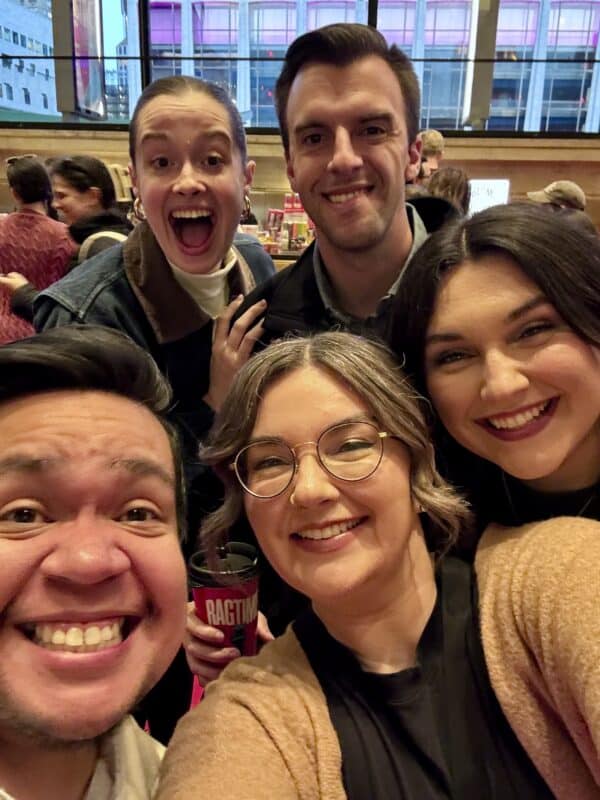
Scarlet Letter Musical cast members in NYC.
“Even with that preparation, there were inevitably things that could only be solved once we were in the space,” Badalamenti said. “It required flexibility, adaptability, and a willingness from everyone involved to make adjustments quickly.”
Ready for the Next Chapter
For the first time in eight years of writing, Sean and Jones feel their show is complete.
“That’s not to say there won’t be more revisions,” Jones added. “There always are, but after this process, I feel confident about the shape of the show. It felt a bit like pushing the baby bird out of the nest and watching it start to fly.”
“We didn’t change a whole lot, but what we changed has really added to the show, and made it something I’m so proud to be a part of,” Sean said.
Lessons for Musical Writers
The Scarlet Letter Musical’s development path offers five practical takeaways for writers planning their own next step.
1: Get the Bones Right First
A full production can teach writers things that no reading can, but it can also make weak material look stronger than it is. Before adding stagecraft and spectacle, the writing itself needs to hold an audience’s attention.
“I’ve always heard that if you can entertain an audience at a reading then you know you have a good show,” Sean said. “Good production can sometimes cover up bad writing. So, I would get some readings under your belt until you know the underlying material is as good as you can make it without all the other layers.”
- For more information, read our article, Is My Show Ready for a Staged Reading
2: Choose the Right Step for the Right Draft
Different production opportunities serve different goals. The key is knowing what your show actually needs at its current stage.
Sean put it plainly: “Do you spend the money to take your baby to Disneyworld? A Toddler? Wait until Elementary School? Maybe it’s worth it, maybe it’s not. Depends on the child, your finances, and your desires for your family. The same is true for your show. If you are purely developing your show, and it’s first draft, second draft, third draft, then I wouldn’t spend the money to go to NYC. New York City, in my opinion, should be a marketing step. Develop the show in your backyard, regionally, with dramaturgs and strategic partnerships. Save your money. Then, when it’s ready to show off, you haven’t overspent before it was ready.”
MusicalWriters.com is especially interested in helping writers build sustainable pathways for their shows, whether that means a concert, workshop, or full production. “Not every show needs a Broadway-sized budget to take a meaningful step. Sometimes what a musical needs most is a strategic production partner, a talented regional community, and enough room to experiment, fail, revise, and grow.” said Lowrey. “That’s the kind of environment we’re working to create.”
💡For more information, read “I Just Had a Table Read… Now What? (Your Next Musical Development Steps)”
3: Find Collaborators Who Will Serve the Show
Good collaborators are more than cheerleaders. They are people who can see what a show is trying to become and help its writers get closer to it.
“The best development partnerships happen when everyone is serving the same goal: making the show stronger,” said Lowrey. “Writers need collaborators who will celebrate what’s working, challenge what isn’t, and bring their own expertise to the table. That’s where the real growth happens.”
Jones credited Lowrey’s directorial frankness with pushing the writers toward musical choices they wouldn’t have found on their own – the kind of feedback that only works when a collaborator serves the show rather than the writers’ feelings. “Don’t be scared of feedback,” Jones said. “Theatre is a team sport, and it’s the team that will make the writing stronger.”
Sean added that being in the rehearsal room purely as a writer – not a producer – made a meaningful difference: “When I was at rehearsal, I could focus on listening and thinking like a writer rather than having my producer hat on, and that was incredibly helpful.”
Jones added: “I would want this exact cast, crew, and creative team all over again.”
💡For more information about finding your own collaborators, read “Finding Your Perfect Musical Writing Partner.”
4: Start Fundraising and Promotion Earlier
Give yourself more lead time than you think you need. Jones said that she would want more time to find sponsors, raise funds, and build hype; Sean named fundraising as one of the biggest challenges of the project.
Development productions, whether in Texas, NYC, or anywhere in between, require considerable planning and expense. And audiences need repeated exposure before they pay attention, which means promotion can’t start too early.
Start talking about your show before tickets are on sale. Start building an audience before you need them to buy something.
💡For more information about promotion, read “How I Sold 2400 Tickets to My Original Musical.”
5: Get Over Yourself and Share the Process
“Marketing is always the most annoying part of any project I’ve done, and I’m not naturally good at it,” Jones said — a sentiment many musical writers share.
But both writers discovered that people responded more to authenticity than to polish. “As much as I feel silly making reels of myself talking into a camera, they seem to perform really well,” Sean said. “So I need to get over myself and make more of them.”
Jones agreed: “My takeaway is that I sometimes overthink marketing, but what people seem to respond to is authenticity.”
You don’t have to become a full-time influencer to market your show. But sharing your process gives audiences a reason to care about the people behind it, not just the finished product.
Check out one of the Scarlet Letter Instagram reels below!
View this post on Instagram
Final Thoughts
The Scarlet Letter Musical is a powerful example of what can happen when a developing musical is given the right kind of room to grow.
As Jones put it: “We were born to be creative, and there may be nothing more powerful than the creativity of a group of people making theatre together. In an increasingly disconnected and inhuman world, theatre is one of the last places where we get to be fully present in our full humanity. It’s the closest thing to magic that I know.”